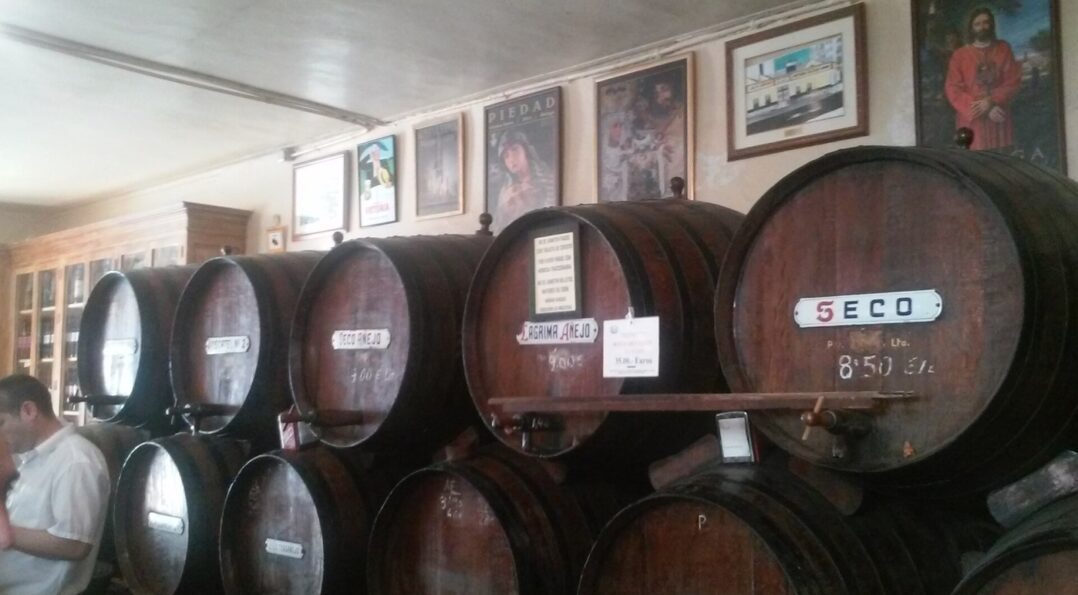
In Malaga you drink a wine that travelled the world long before we did. And it’s still drunk as it was a century ago: standing at the counter, in front of a row of barrels. The waiter, meanwhile, chalks the bill on the worn wood. The wine of Malaga is, above all, that. A legendary sweet wine, served without fuss, a few minutes’ walk from Casa Beatas. Here’s what to know, and above all where to go and taste it.
A legendary sweet wine, the “Mountain wine”
Malaga’s sweet wine was one of Europe’s great export wines. In the 18th and 19th centuries, the English called it the “Mountain wine”. It flowed then across the tables of northern Europe. It even earned its stripes: an old house in the city was a supplier to Queen Isabel II. The DO Málaga appellation was born in 1933, one of the oldest in Spain. A useful detail: it protects the sweet wines, but also dry and fortified ones. Malaga isn’t only about sugar, then. Production fell sharply in the 20th century, after phylloxera and the fashion for dry wines. But a handful of houses held on. It’s thanks to them that this wine is still drunk in its original setting.
Pedro Ximénez and Moscatel: understanding the styles
Two white grapes do almost everything. Pedro Ximénez gives dark, thick wines. In them you find aromas of raisin, coffee and chocolate. Moscatel, on the other hand, is lighter, floral and fragrant. The secret is an old one. The grapes are left to dry in the sun on mats, sometimes for nearly three weeks, to concentrate the sugar. On the casks you’ll read words like seco, Lágrima, Trasañejo or Pajarete. These are so many styles and ages. The simplest thing is still to ask: they’ll let you taste before you choose.
The Cartojal, the pink star of the Feria
If you come in August, you can’t miss it. The Cartojal is a pale, young and sweet Moscatel. It’s sold everywhere during the Feria de Malaga, in fuchsia-pink cups that take over the city. Some 240,000 bottles are said to be sold over the nine days of the fair. The figure gets around; take it for what it is. Served well chilled, it’s simply the taste of the Malaga summer. It’s not a wine to keep, but a wine to party with. You drink it young, among friends, in the middle of the crowd.
The historic bodegas of the centre
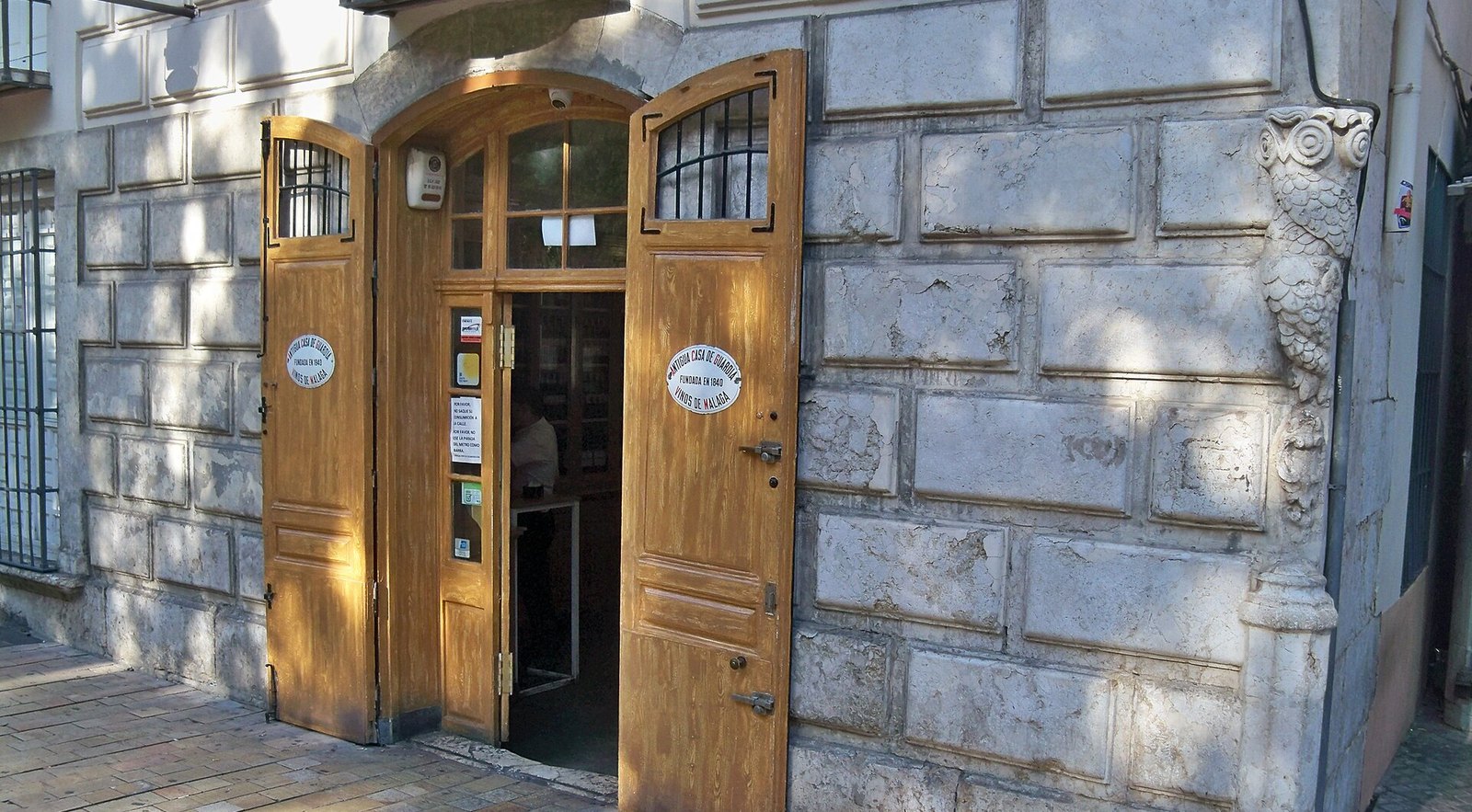
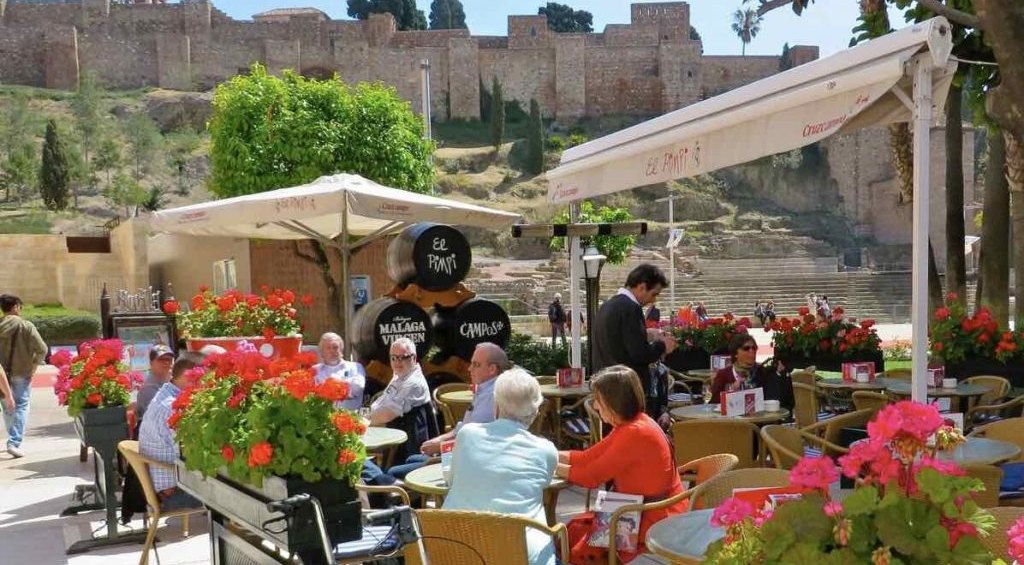
To taste it properly, here are three addresses, all on foot. First, the Antigua Casa de Guardia, on the Alameda Principal. It’s the city’s oldest tavern, founded in 1840. The wine comes from the casks lined up along the counter. And the bill is chalked on the wood. You go for the old-time atmosphere, and for a few euros a glass. Then, El Pimpi, opened in 1971 near the Picasso Museum. It’s more of a bodega-restaurant: patios, walls covered with Feria posters, barrels signed by the Picasso family or by Antonio Banderas, one of the co-owners. Finally, on our own street, at 43 Calle Beatas: Los Patios de Beatas. The house lines up more than 600 wines and offers real tastings, fifty metres from the hotel. In every case, let yourself be guided. A Moscatel to start, a Pedro Ximénez to finish, and there you go.
How to taste it, and where to set down your glass
Sweet wine is served cool, in small quantities. It’s often at the end of a meal, or as an aperitif. It loves blue cheese, dried fruit, a simple dessert. But the most Malaga way is to drink it standing, with a tapa, no ceremony. And for barely a few euros, you taste several styles in a row: it’s one of the cheapest pleasures in the city. My tip to finish: open on a well-chilled Moscatel, end on an old Pedro Ximénez or a rare Trasañejo, and let the barman guide you from one cask to the next. That’s how you drink sweet wine in Malaga: standing, without fuss, the bill scrawled in chalk on the counter.