Semana Santa is the biggest week of the year in Malaga. It runs for eight days, from Palm Sunday to Easter Sunday. Every day, the city brings its tronos out into the streets. The processions set off in the mid-afternoon. Then they carry on deep into the night. This isn’t Seville, and that’s exactly what makes it gripping. From the old town, you’re in the front row. One important note right away: book early. The city fills up months ahead.
Malaga versus Seville: tronos, not pasos
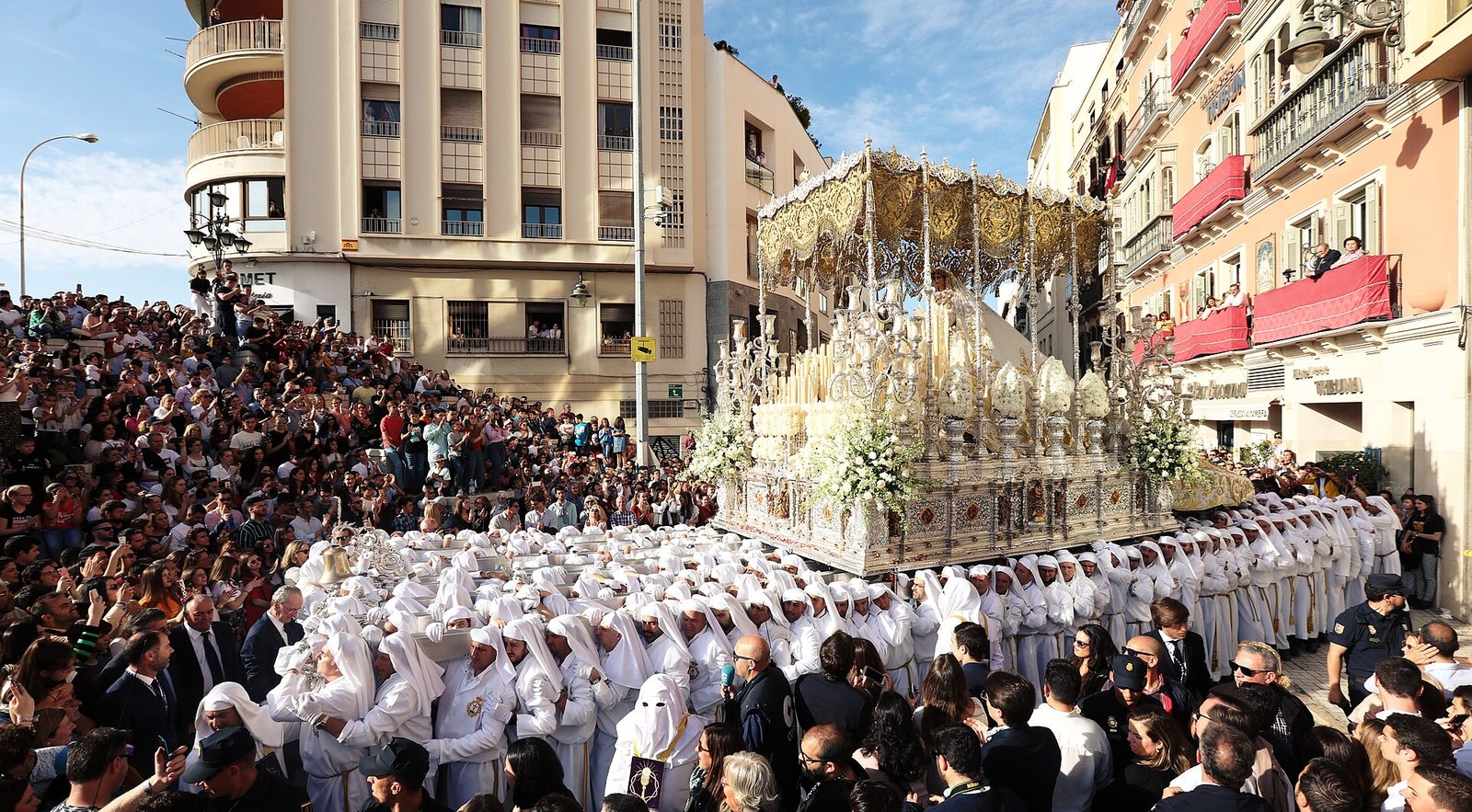
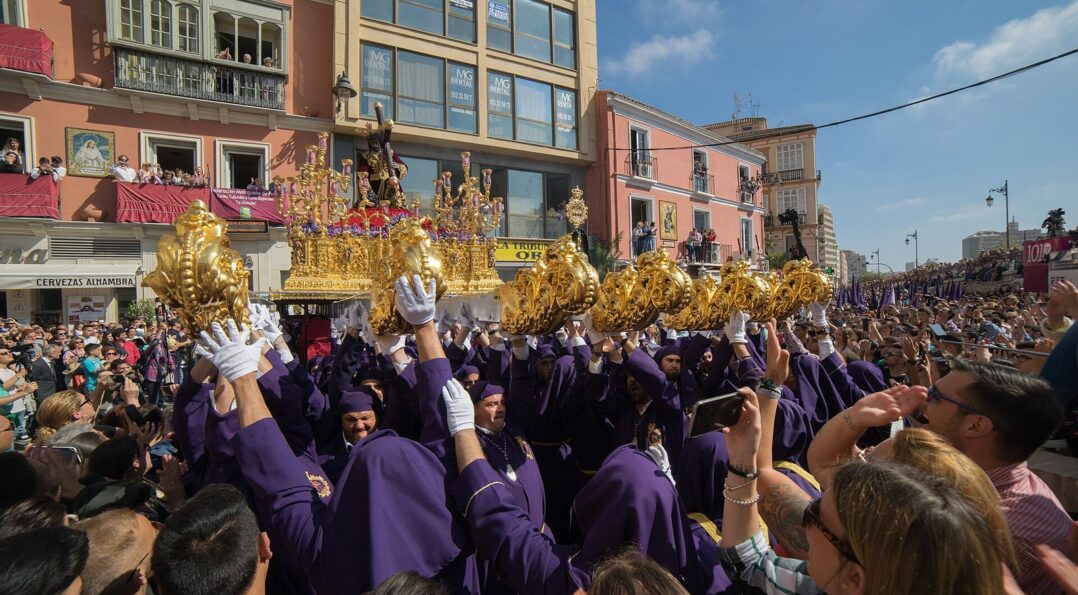
Here you don’t say pasos, but tronos. And they aren’t the same thing. Malaga’s tronos are the biggest and heaviest in Spain. Some come close to five tonnes. They’re carried on long poles, in rows of hombres de trono. There are 120 to 270 of them. They walk in full view, beside and under the poles. In Seville, by contrast, the costaleros stay hidden underneath. The result is a golden mass that sways forward. It’s very visible, almost alive. The mood follows: warm, loud, emotional. It’s a long way from Seville’s hushed silence. It’s that joyful excess that surprises visitors.
When is Semana Santa in Malaga?
The dates change every year, because Easter is movable. It’s the first Sunday after the first spring full moon. So Holy Week runs from Palm Sunday to Easter Sunday. Most often, that falls in late March or April. Before you book, check the current year’s dates. You can also see the programme on the city’s official website. Remember this above all: Maundy Thursday and Good Friday are the two most intense days. They’re also the busiest.
The highlights: El Rico, the Cristo de Mena and the Legion
Two moments bring out the whole city. First, Holy Wednesday. The Jesús “El Rico” brotherhood frees a prisoner. It’s a tradition granted by Carlos III in the 18th century, full of emotion. Then, Maundy Thursday. It’s the turn of the Cristo de la Buena Muerte, known as the Cristo de Mena. It’s escorted by the Spanish Legion, who sing El novio de la Muerte. The crowd is enormous by then. Days before, the Legion’s image even arrives by sea, at the port. Finally, each procession is opened by the nazarenos, in pointed hoods in their brotherhood’s colours, led by a band.
Where to watch the processions
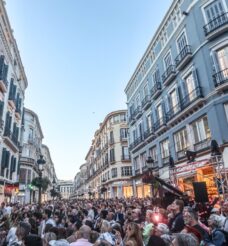
The recorrido oficial, the official route, crosses the Alameda Principal, Calle Larios and Plaza de la Constitución. It ends at the Cathedral. That’s where the stands and thousands of paid chairs go up. Book them months ahead for Thursday and Friday. There’s also a free, legendary spot: the Tribuna de los Pobres. These are the stone steps at the end of Calle Carretería. Arrive very early, because the places go fast. To see the tronos with some distance, I’d rather suggest the Alameda, Plaza de la Marina or Molina Lario. The narrow lanes are worth it too, near the brotherhoods’ exits. There you really feel the bearers’ effort.
Practical tips
The processions usually set off in the mid-afternoon. They then run late into the night. So bring comfortable shoes and patience. Keep your things close in the crowd too, especially on Thursday and Friday. Some moments are solemn: lower your voice, let people pass, turn off the flash. Finally, check the forecast the day before. A heavy shower can indeed delay or stop a procession. And if you’re travelling with children, pick the early evening and a wide street.
From Casa Beatas, in the heart of the old town
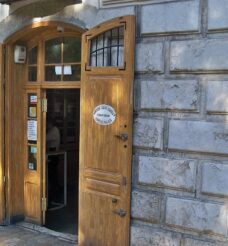
Staying in the old town changes everything. You step out, follow a trono, come back to rest your legs, then head out again. At Casa Beatas, you’re a two-minute walk from the official route. The city’s other great event, in a very different spirit, is the Feria de Malaga, in August. A question about the day’s programme or the best spot to watch? Message me on WhatsApp, I’m happy to help.